
How Joel Spolsky Beat the Odds Without a Marketing Budget
Lessons from a 2004 interview—and why they still hold up today


Back in 2004, I interviewed a sharp, funny founder named Joel Spolsky for an online newsletter called SoftwareCEO.com.
Joel had built a boutique software shop called Fog Creek Software in New York City. Fog Creek (now Glitch) was known for two things: smart bug-tracking software (FogBUGZ) and a blog with a cult following, called Joel on Software.
And Joel did it all with a marketing budget of exactly $0.00.
No SEO. No martech. No trade shows. No sales force.
Just writing.
And yet, his blog had 30,000 subscribers and 3.8 million page views a month. A link to Fog Creek at the bottom of each post brought in hundreds of qualified leads.

It was one of the most effective marketing engines I’d ever seen. And Joel built it all with nothing but brains, honesty, and a knack for saying what everyone in his audience was thinking.
Going through my files more than 20 years later, I came across that interview. And I’m amazed by how many of Joel’s ideas still feel right on the money.
(Click on the graphic to see my original article.)

4 timeless lessons in marketing from Joel Spolsky
1. Human-to-human connection beats jargon
Joel hated the jargon of corporate marketing. His advice?
"Forget the marcom blah blah."
Joel knew that readers don’t want "seamless integration with enterprise infrastructure…" They don’t want “110% committed to your company success…”
They want helpful, honest info, with a little personality mixed in. As long as that doesn’t get in the way.
2. Your greatest marketing asset is an honest voice
Joel’s blog didn’t sound like anyone else’s. He blended technical insights with caustic wit and personal stories drawn from working at places like Microsoft.
And he took as many words as he needed to tell each story.
He was writing long posts before those became the recognized way to build “engagement.”
His voice was authentic, years before that became a catchword.
3. Build trust, not funnels
Joel didn’t collect email addresses. He didn’t push visitors into a funnel. He didn’t try to monetize every blog post.
“You get a lot more credibility with developers if there’s no marketing,” he told me.
So he freely gave away lots of value. And he built a tight link of trust with the many developers who followed him.
4. Good writing sells
Every time Joel published a blog post, downloads of FogBUGZ spiked 10X. No CTAs. No paid ads. Just a link at the bottom of every page.
And many developers who already knew him, liked him, and trusted him decided to check out his product.
And guess what?
More than 20 years later, the 2025 B2B Marketers Cheat Sheet from Netline and Marketing Profs confirms everything Joel was saying:
Content needs to be more than filler—it must educate, engage, and solve problems. Addressing real audience needs makes your content more trustworthy and impactful.
Yes, Joel was way ahead of his time. He was doing content marketing many years before that term was ever coined.

What happened next?
A few years after my article, Joel went on to co-found Stack Overflow, the self-help platform for developers.
After that, he launched Trello, an online project management platform. And he sold both for serious money. Like in the billions. He also wrote four books on software development that each found a ready audience.
It’s nice to see a guy like Joel come out on top.

What about Joel’s marketing philosophy?
That approach became known as “content marketing” and it swept across the landscape, sucking millions of dollars out of traditional radio, TV, and print advertising.
Content marketing supercharged the need for white papers.
And it’s still the force behind every B2B company that leads with content to earn trust, instead of trying to force a sale.
Me? I’ve never forgotten that interview
Writing up my interview with Joel in 2004, I realized beyond all doubt that content wasn’t fluff.
I’d been saying that myself since the 1990s.
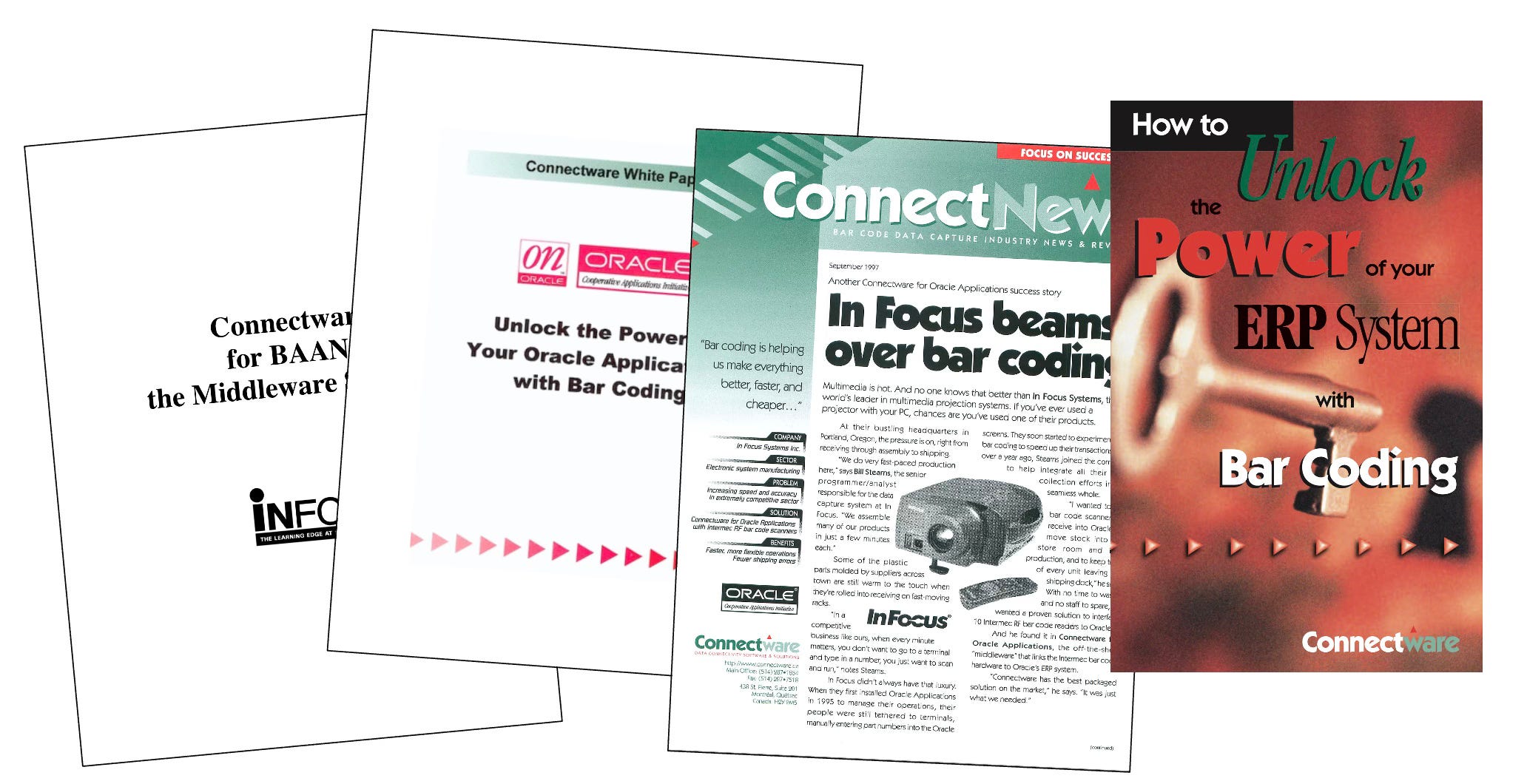
And I’d seen first-hand how a mix of case studies, newsletters, and white papers (as shown below) could help a young upstart company beat out much larger, more established competitors.
But Joel confirmed all that for me.
Today, content is the backbone of B2B marketing.
That makes good content more important than any martech stack. No software, not even AI, can do anything without an honest voice to promote. I think too many people forget that today.
So here's to Joel. And here’s to honest writing with an authentic voice that really helps people solve their problems.
If you’re helping your clients build a business—or just trying to get your ideas out in the world—remember this:
“Forget marketing to people; just solve their problems.”
—Joel Spolsky, 2004
Here’s the original piece from 2004 I dug up in the Wayback Machine: a blast from the past for anyone who remembers Joel before Stack Overflow.
P.S. If you want to build trust like Joel did—by helping people solve real problems—your content has to speak in a clear, honest voice.
That’s where I can help.
I offer two focused services for B2B marketers and founders:
• White Paper Blueprint — Start strong with a clear plan
• White Paper Checkup — Get expert feedback to sharpen your message
P.P.S. Want more help with your white paper?
Visit my Resources page for free downloads, checklists, and tipsheets.
P.P.P.S. Did you enjoy this story? To keep them coming…
